Refractive Surgery Lab
26 January 2026 2026-01-29 14:42Refractive Surgery Lab
See the world clearly from the moment you wake up!
Refractive surgery is the set of surgical techniques used on millions of people worldwide to correct refractive errors such as myopia, hyperopia, and astigmatism. Essentially, these are procedures that adjust the focus of the eye so that we can see clearly without needing glasses or contact lenses. There are several different techniques, and each time the one that will offer the best result for each patient is selected. Thanks to technological advances and our experience, these techniques are completely safe and capable of meeting the needs of patients.
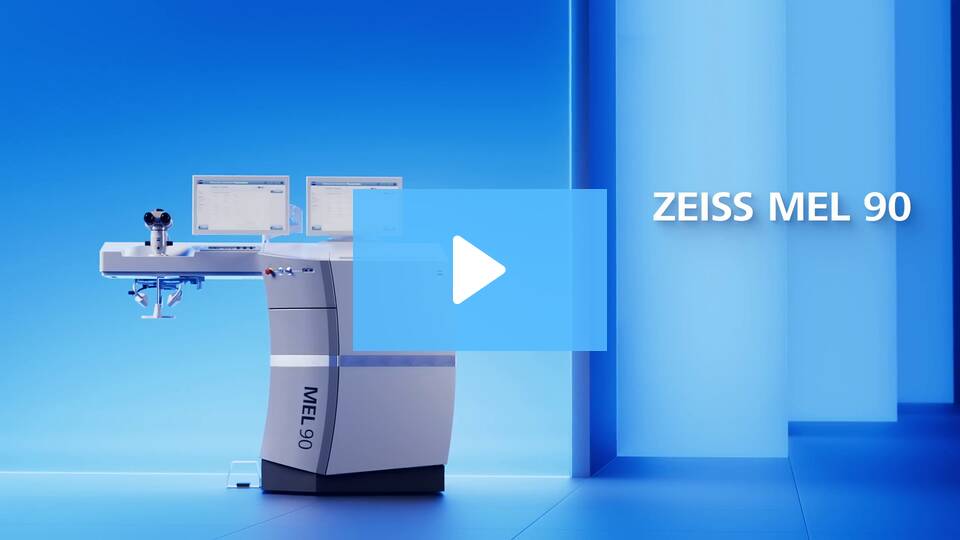
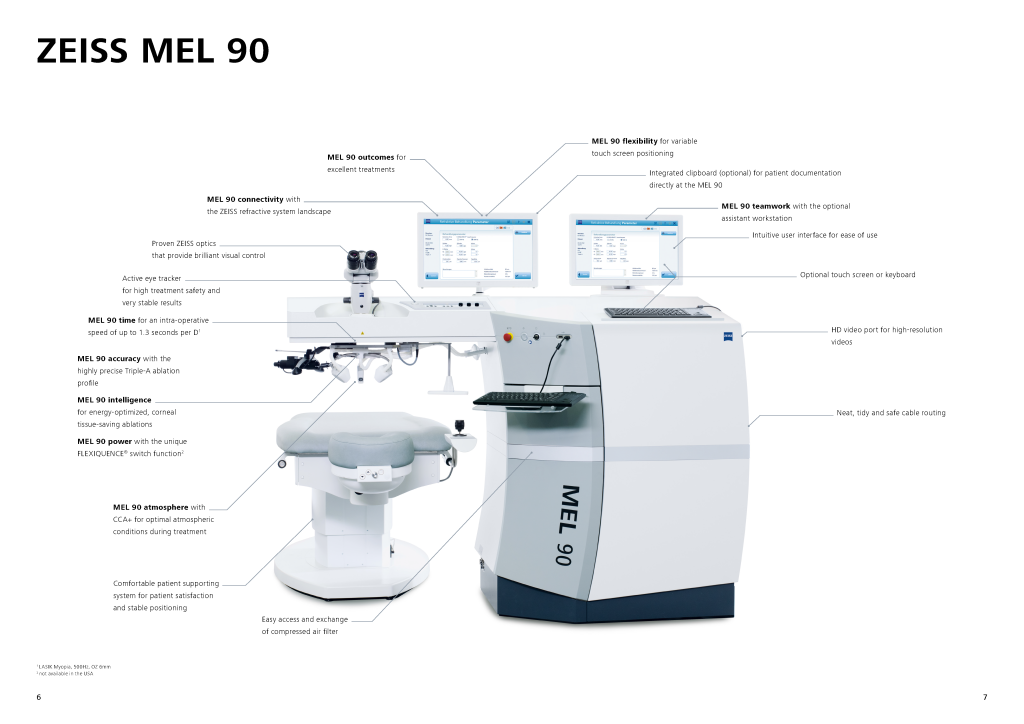
The main goal of refractive surgery is to change the curvature of the cornea by reshaping its surface using a laser. The result is that light is focused on the retina, giving us clear vision without glasses. At LVO, two systems are used for this purpose: the Excimer laser MEL90 Carl Zeiss Meditec (GERMANY) and the latest generation Intralase iFS Femtosecond Laser from AMO (USA). Both lasers are highly accurate and directional, capable of correcting the main refractive error (myopia, hyperopia, astigmatism) in the cornea, as well as errors that affect the detail of the focus (high-order aberrations).
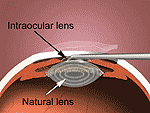
In cases of patients with specific characteristics that do not allow laser treatment, or with very high refractive error, intraocular lens implantation or crystalline lens replacement surgery may be performed. In this case, the correction is performed inside the eye instead of on the surface and has equally good results.
Excimer laser MEL90 Carl Zeiss Meditec (GERMANY)
LASIK – Femtosecond LASIK
Conventional method (LASIK):
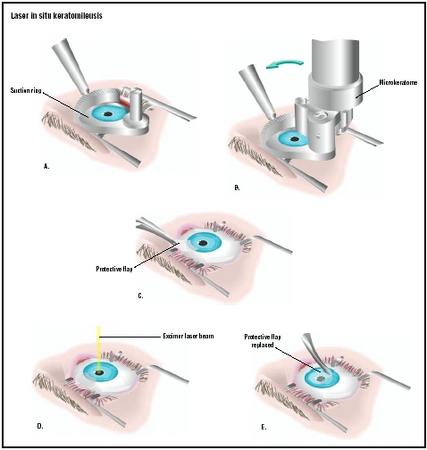
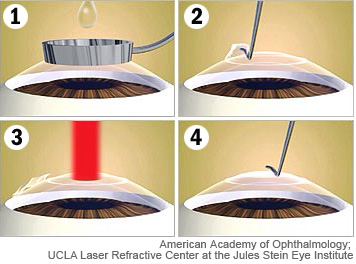
With this method, the refractive error is corrected not on the surface, but inside the cornea. The surgeon first creates a thin surface flap of corneal tissue using a special instrument called a microkeratome. This flap is not completely detached, but remains attached to the cornea on one side. This flap is then lifted, revealing the inner layers of the cornea, and the laser is applied, which changes the curvature of the cornea and corrects the refractive error. Finally, the surgeon replaces the flap in its position without the need for stitches. The procedure is performed with anesthetic drops, takes a few minutes for each eye, and is painless. This procedure was developed about 25 years ago by Professor Pallikaris at the University of Crete and is currently the most popular refractive surgery worldwide.Femtosecond LASIK: The most modern method of refractive correction using exclusively Femtosecond Laser:
Today at LVO, the creation of the surface flap for LASIK is performed using the latest generation Intralase iFS Femtosecond Laser from AMO , which provides the most advanced high-precision, high-speed, and directional technology platform in Greece speed, and directionality, eliminating the need for a scalpel to create the flap and performing the incision with absolute precision and with characteristics and dimensions selected by the surgeon, depending on the specific characteristics of the patient’s eye. After the flap is created, the refractive error is corrected with a laser that changes the curvature of the cornea, as in conventional LASIK. Vision is restored immediately, as patients see clearly right after surgery. The procedure takes a few minutes for each eye, is painless, and is performed with anesthetic drops.PRK
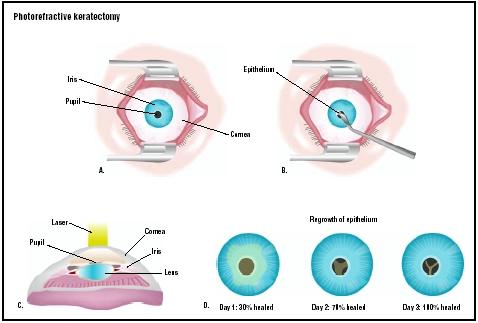
t-PTK- PRK
LASEK
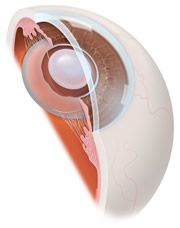
Phakic Refractive Lens Implantation

The procedure is performed under local anesthesia, lasts 10-15 minutes for each eye, and requires a total of 3 days of hospitalization. There is usually a 1-2 day interval between the right and left eye procedures. The method is usually recommended for people under the age of 45, as the crystalline lens begins to cloud with age and replacement is preferred. Also, with the insertion of an intraocular lens, the adjustment and therefore the near vision of the individual is maintained, since the crystalline lens remains in place. The results of the method are immediate and very satisfactory.
Replacement of the crystalline lens with an intraocular lens (Clear Lens Extraction, CLE)